
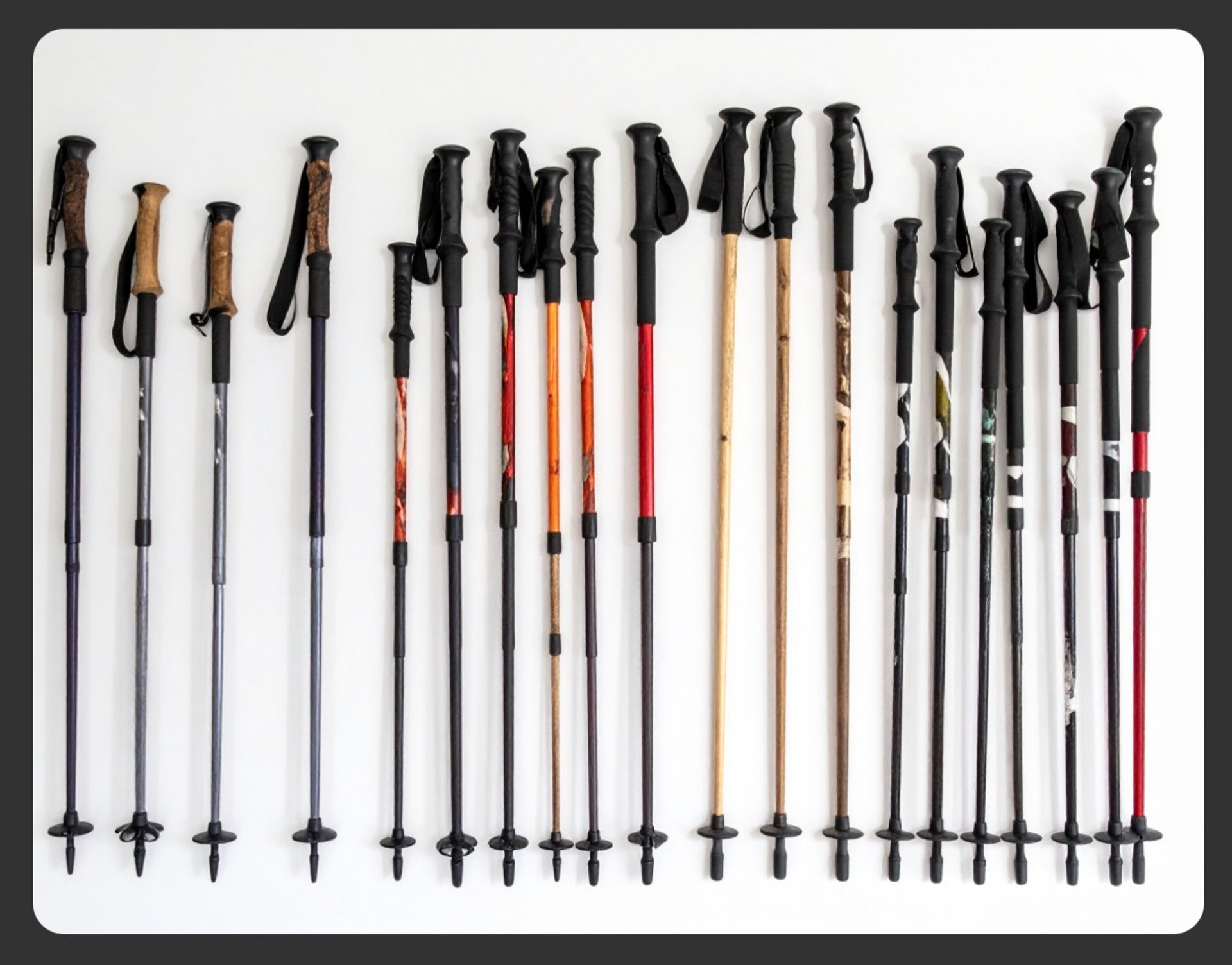
Trekking Poles: Functional or Simply Cool?
All the curious science you never knew about trekking poles
David & Lovee Miller
11/4/20257 min read
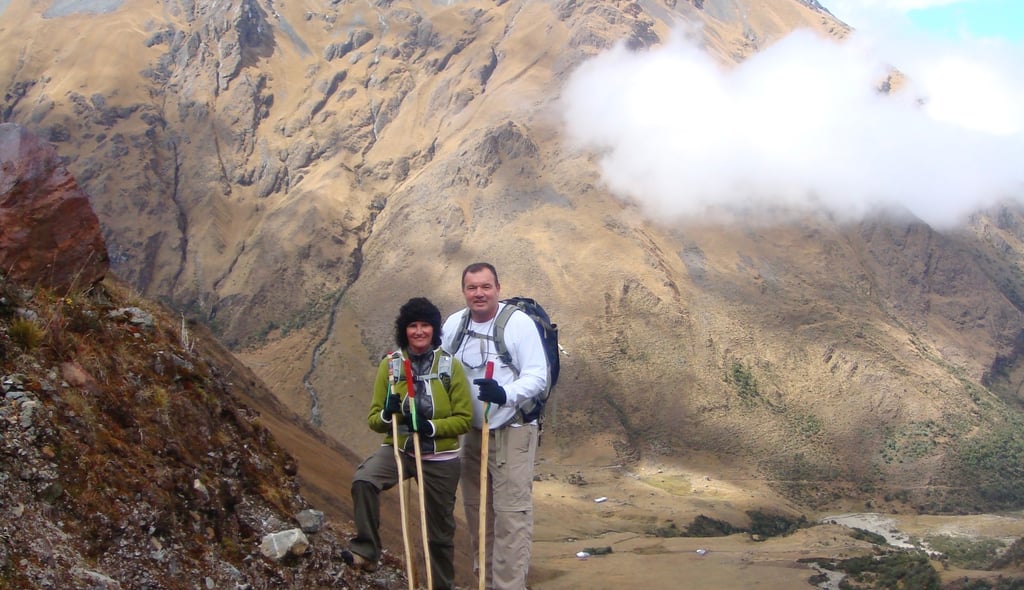
Trekking Poles: Functional or Simply Cool?
All the science you never knew about trekking poles
Are you curious, as we were, why Trekking Poles (also known as hiking poles, walking poles, or walking sticks) are gaining popularity among hikers and backpackers? This blog will examine the scientific research on the biomechanical, physiological, and performance effects of trekking poles, viewing them as practical tools with clear impacts rather than merely cool-looking accessories.
Stability & Load Distribution
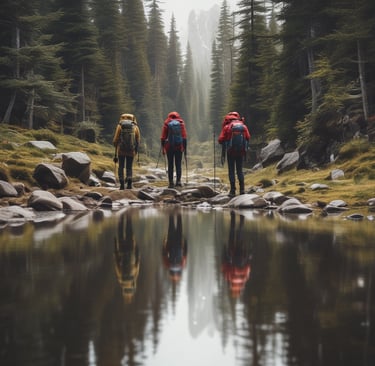
When two poles are used, support and propulsion forces are spread over four contact points (two feet and two poles), rather than only through the lower limbs. This distribution lessens the sole dependence on the legs and joints for lateral stability, especially when navigating uneven terrain or downhill. For example, a study found that using trekking poles can decrease knee joint force by up to 25 percent during downhill walking, emphasizing their effectiveness in load sharing and joint protection. A review noted: 'Trekking poles decrease lower extremity loading and forces but increase cardiovascular demand.' In practical terms, by shifting some of the force from the hip, knee, and ankle joints to the arms and upper body, trekking poles can lower peak ground reaction forces and joint movements, particularly during descent. This redistribution also enhances gait stability, as shown by reduced sway and fewer micro-losses of balance in both outdoor and lab settings.
Upper-Body Engagement & Whole-Body Contribution
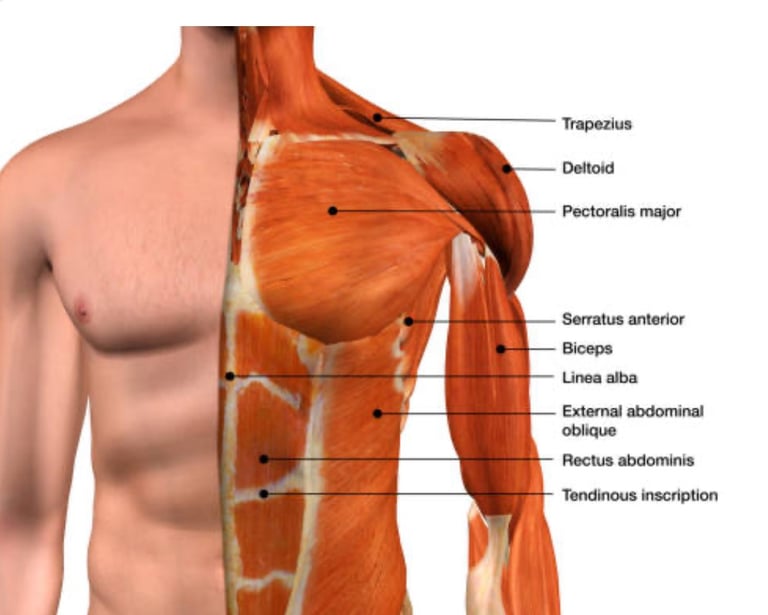
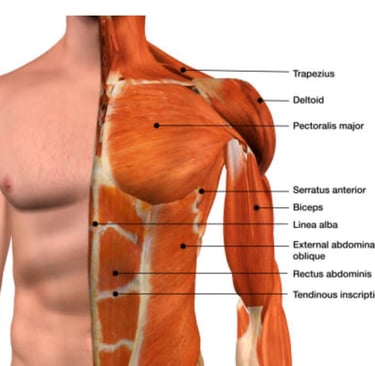
Planting trekking poles and applying backward or downward force during each stride engages upper-body muscles, including the deltoids and triceps (for extension and backward push), biceps and forearm flexors (for gripping and planting), latissimus dorsi and rhomboids (for torso and shoulder girdle stabilization); as well as, core muscles for trunk stabilization (rectus abdominus and obliques). This action turns a mainly lower-limb activity into a full-body workout. The increased muscle involvement boosts mechanical effort and the metabolic cost in different conditions.
Energy Expenditure & Metabolic Demand
Due to the increased muscular effort required from the arms, shoulders, and torso, the metabolic cost—measured by oxygen consumption and heart rate—during walking with trekking poles is higher than when walking without them. This effect is especially noticeable when terrain, slope, or external loads raise physical demands. For example, one well-cited study found:
These data suggest that trekking poles may be a helpful tool for increasing caloric burn, as energy production increased during exercise without a rise in perceived effort. However, the effect depends on the context; factors such as load, slope, terrain, speed, and technique all influence the outcome.
Joint Load Reduction & Muscle Damage Mitigation
Several investigations indicate that poles can reduce lower-limb joint loading and muscle damage metrics following downhill or loaded walking. For example, a recent review states:
“Using poles decreases muscle damage after hiking… observed less delayed-onset muscle soreness in the trekking pole group, along with lower creatine kinase levels.”
These findings suggest that using a trekking pole may help reduce fatigue and mechanical stress in the lower limbs, particularly during eccentric activities such as downhill walking or carrying a heavy backpack.
Summary of Key Research Findings
In the controlled laboratory trial , “Trekking Poles Increase Physiological Responses to Hiking Without Increased Perceived Exertion,” participants using poles exhibited significantly higher VO₂, energy expenditure, and heart rate across grades, while perceived exertion remained unchanged. PubMed+1
The field track study Effects of Backpack Load and Trekking Poles on Energy Expenditure During Field Track Walking, found no difference in energy expenditure for unloaded walking with poles vs without; however, when carrying a backpack load, poles did influence physiological variables (though not necessarily perceived exertion). PubMed+2Thieme+2
The Uphill Treadmill Study: Do Poles Save Energy During Steep Uphill Walking? (n = 14 mountain athletes, slopes up to ~38.9°) The vertical cost of transport was modestly lower with poles at steeper inclines (≈approximately 2–3% lower), and perceived exertion (RPE) was significantly lower under many incline conditions. Nicola Giovanelli
A recent outdoor hiking study reported no significant difference in total energy expenditure, VO₂, ventilation, or respiratory exchange ratio (RER) between conditions with 0, 1, or 2 poles during ~10 minutes of uphill hiking and ~10 minutes of downhill hiking. WKU TopScholar
Interpretation of Results
Pulling these findings together, trekking pole use increases metabolic cost primarily when terrain or a heavy load requires greater upper-body involvement and stability, such as on steep slopes or with a heavy pack. In less demanding conditions, this effect is less evident.
Perceived exertion often remains unchanged despite higher physiological demand, indicating that individuals may experience similar subjective effort while expending more energy when using poles.
Joint loading, particularly during descent, is reduced with the use of trekking poles, which is beneficial for joint preservation and fatigue reduction.
The effects of trekking poles may be minimal on flat terrain, with light loads, or when poles are used passively without active planting or pushing. Using a pole technique of active planting and pushing definitely increases metabolic demand.
Active engagement of the upper body enhances the benefits of trekking poles, whereas minimal arm use diminishes these advantages.
Practical Implications for Hikers and Fitness-Oriented Individuals
Contexts in Which Trekking Poles Provide the Most Benefit
Hiking with a heavy backpack (≥ 20–30% of body mass) on uneven, steep terrain.
Descending or traversing loose or unstable ground, where enhanced stability and reduced joint loading are advantageous.
For a comprehensive whole-body workout, consider using trekking poles to engage the upper body, core, and lower-body muscles simultaneously.
Trekking poles are recommended to mitigate fatigue, muscle damage, or joint stress during long treks, particularly for older individuals or those undergoing rehabilitation.
When Benefits Are Minimal
When trekking poles are carried but not actively used, such as with passive placement or minimal pushing.
When speed and efficiency are the priority, the added metabolic cost from arm involvement may reduce net speed in some contexts.
Technique and Fit Recommendations
Adjust the pole length so that when you stand upright on flat ground, your elbow bends about 90° with the pole’s tip at your foot.
During uphill sections, poles should be shortened by about 5–10 cm (or one setting) to improve comfort and help generate effective force from behind.
When descending, lengthen poles by about 5–10 cm so the pole plant can be placed ahead, helping the arms with braking. Insert your hand from the bottom into the wrist strap before gripping the handle; this improves force transfer and helps avoid sudden loads on the wrist.
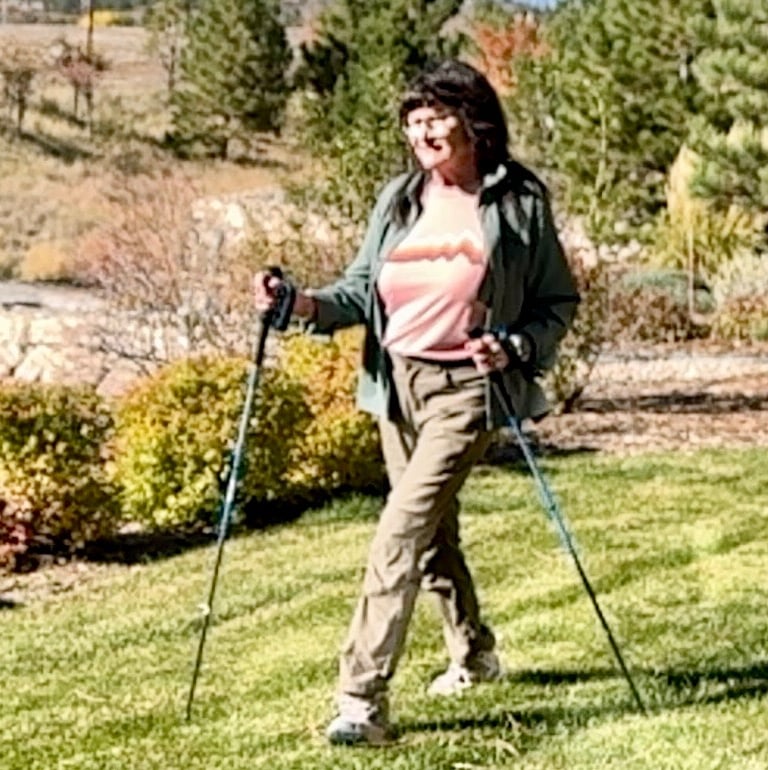
Proper planting involves placing the pole slightly ahead and to the side, rather than directly under the body, to make it easier to push back into the handle and use upper-body muscles instead of relying only on passive arm position.
Select the pole material and locking mechanism based on the terrain and load requirements. Aluminum is durable for rough use, while carbon fiber is lighter but more prone to breaking if mishandled.
Use appropriate tip attachments, like rubber tips for rock and carbide tips for dirt or ice, along with suitable baskets for snow or summer conditions, to ensure effective ground interaction.
Caveats & Considerations
The higher metabolic cost of using active trekking poles means you'll need more energy and food over time; nutritional planning should consider this increased requirement.
Poor technique, such as dragging poles or failing to engage the upper body, can cancel out the benefits of using trekking poles and may lead to increased fatigue.
Studies differ in participant fitness, terrain, load, and pole technique; therefore, results are not consistent across all hiking situations.
Some studies indicate that energy savings or lower transportation costs occur, especially when walking uphill steeply, as poles enable a more efficient gait; however, these savings are only modest (~2–3%). Nicola Giovanelli
Summary & Recommendations
In summary, scientific evidence strongly supports the use of trekking poles when hiking in situations that involve unstable terrain, heavy loads, or rugged terrain. Using the upper body significantly increases metabolic rate and calorie burn, while clearly reducing stress on lower-limb joints and lowering the risk of muscle injury. Trekking poles also help decrease the risk of falls and injuries.
For hikers and fitness-oriented users:
Suppose you routinely carry moderate to heavy loads, traverse steep or unstable terrain, or are seeking a full-body workout. In that case, trekking poles are a highly effective and recommended tool for your needs.
For those who primarily walk on light, flat trails, trekking poles still offer additional benefits, including improved muscle stimulation and stability.
Proper technique and correct pole length are essential, as passive use significantly reduces the benefits of trekking poles.
An increase in calorie expenditure can be expected when actively using trekking poles.
Use trekking poles not only to support your movements, but also to efficiently distribute mechanical load across muscle groups, supporting endurance and protecting your joints.
As you incorporate trekking poles into your hikes, try these guidelines on your next trip and observe the difference. By experimenting with the techniques and suggestions provided, you can improve your hiking experience, boost your confidence, and see firsthand the positive effects of using trekking poles. This method not only supports your movement but also empowers you to take charge of your hiking journey.
We are curious about your experiences with trekking poles! Do you routinely hike with them? What style and brand of poles do you prefer the most? (We use Black Diamond carbon fiber.) Have you ever had a weird or funny experience using trekking poles? Drop us a line in the comments section. We would love to hear from you.
Gomeñuka, N. (2019). Effects of Nordic walking training on quality of life, balance, and functional mobility in the elderly: A randomized clinical trial. PLoS One, 14(1), e0211472.
Michael J Saunders 1, G Ryan Hipp, David L Wenos, Michael L Deaton (2008). Trekking poles increase physiological responses to hiking without increased perceived exertion
J Strength Cond Res. 2008 Sep;22(5):1468-74.doi: 10.1519/JSC.0b013e31817bd4e8.
Curiosity is a powerful driving force that often leads individuals to explore the unknown, ask questions, and seek out new experiences that enrich their understanding of the world around them.
Exploring the wonders of life together.
Connect
Learn
loveedavidmiller@gmail.com
123-456-7890
© 2025. All rights reserved.